Preparing Students for Careers That Do Not Yet Exist
The world of work is changing rapidly. Some of the careers today's students will pursue may not yet exist. How can education prepare young people for an uncertain future?
 By John Karanja
4 min read
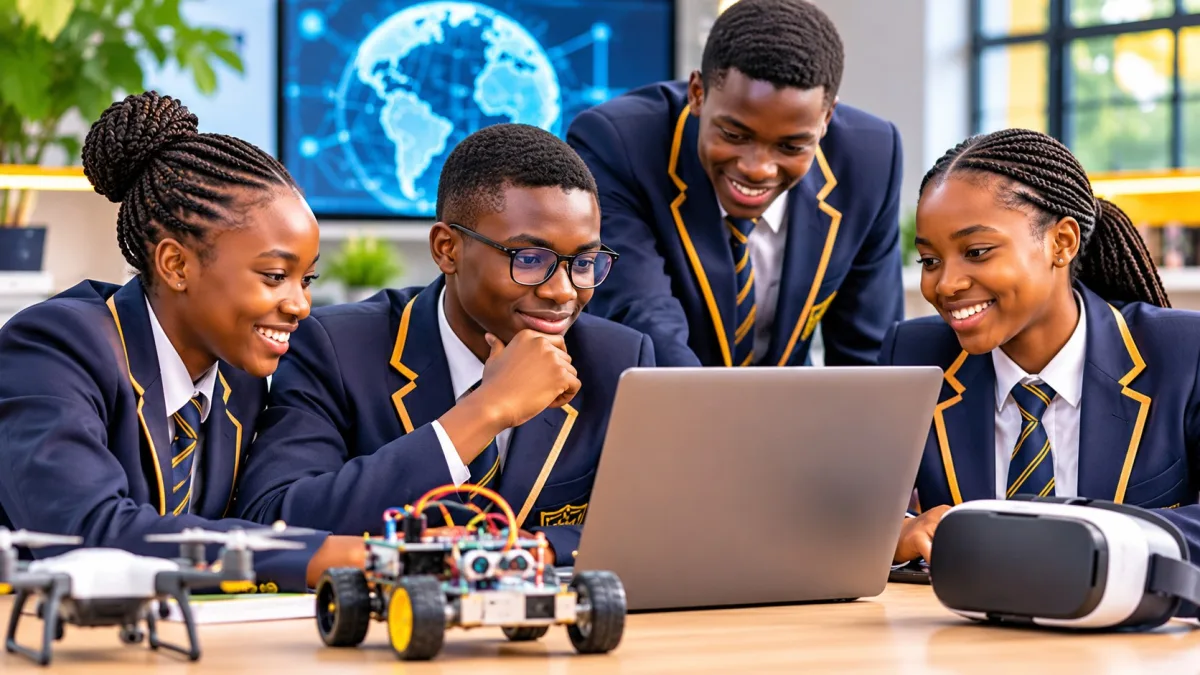
The world of work is changing rapidly.
Artificial intelligence, automation and emerging technologies are transforming industries and creating new opportunities. Tasks that once required hours of human effort can now be completed in moments, while entirely new kinds of work are appearing around tools and ideas that did not exist a generation ago.
Some of the careers today’s students will pursue may not yet exist.
This raises an important question: How can education prepare young people for an uncertain future?
Beyond textbooks and examinations
The answer goes beyond textbooks and examinations.
For a long time, success in school was closely tied to how much information a student could recall. Knowledge still matters — but information is now more accessible than at any point in history. What increasingly sets people apart is not simply what they know, but what they can do with it: how they question it, connect it, apply it and build on it.
An education designed only around memorizing content risks preparing students for a world that is already passing. An education designed around understanding, application and growth prepares them for a world that is still taking shape.
The skills that travel with students
Students need to develop critical thinking, creativity, communication and problem-solving skills.
- Critical thinking helps students weigh evidence, question assumptions and make sound judgements — especially when information is plentiful but not always reliable.
- Creativity allows them to imagine new possibilities and find original solutions rather than waiting for ready-made answers.
- Communication enables them to share ideas clearly, listen carefully and work with people from different backgrounds.
- Problem-solving gives them the confidence to break down complex challenges and keep going when the path is not obvious.
These skills are not tied to any single job or industry. They travel with students wherever their lives take them.
Adapting, collaborating and facing the unfamiliar
They must learn how to adapt, collaborate and approach unfamiliar challenges with confidence.
Adaptability is not something that can be learned from a definition. It grows through experience: tackling open-ended projects, working with others on problems that have no single right answer, and discovering that a first attempt can be improved. When classrooms make room for this kind of learning, students begin to see uncertainty not as a threat but as part of the process.
Collaboration matters just as much. Few of the significant challenges in tomorrow’s world will be solved by one person working alone. Students who learn to share ideas, value different perspectives and take responsibility within a team will be ready to contribute wherever they go.
Teaching students how to think
Education should teach students how to think, not simply what to remember.
This does not mean abandoning content. It means treating content as the material that thinking works on. A history lesson can teach students to compare sources and recognize different viewpoints. A science lesson can teach them to form questions, test ideas and learn from results that do not match expectations. A mathematics lesson can teach them to reason step by step and explain their thinking to others.
Foundations and curiosity, together
Strong academic foundations remain essential, but they must be supported by curiosity and a willingness to keep learning.
Reading, writing, numeracy and core subject knowledge give students the tools they need to understand the world. Curiosity gives them the motivation to keep exploring it. Together, they create learners who do not stop learning when they leave school — people who can pick up new skills, re-train when circumstances change, and keep growing throughout their lives.
The future will reward individuals who can embrace change and use their knowledge creatively.
Our responsibility
Our responsibility is not to predict every opportunity tomorrow will bring, but to prepare young people to recognize and pursue those opportunities.
None of us can say with certainty what the world of work will look like in twenty years. But we can make sure that the young people in our schools leave with strong foundations, the skills to think for themselves, the confidence to face the unfamiliar and a lasting love of learning. Whatever the future holds, those are the qualities that will help them meet it.
Questions & answers
How can schools prepare students for jobs that do not exist yet?
Are academic foundations still important?
What is the role of education in an uncertain future?
Conversation (0)
Comments are moderated and appear after review. Please be respectful. Comment policy.
Join the conversation
Sign in with a verified email to comment and react. Reading is always free.
No comments yet.