Why Education Must Go Beyond the Classroom
Some of life's most valuable lessons are learned outside the classroom. Sports, performing arts, leadership and community service help young people discover who they are and what they can become.
 By John Karanja
2 min read
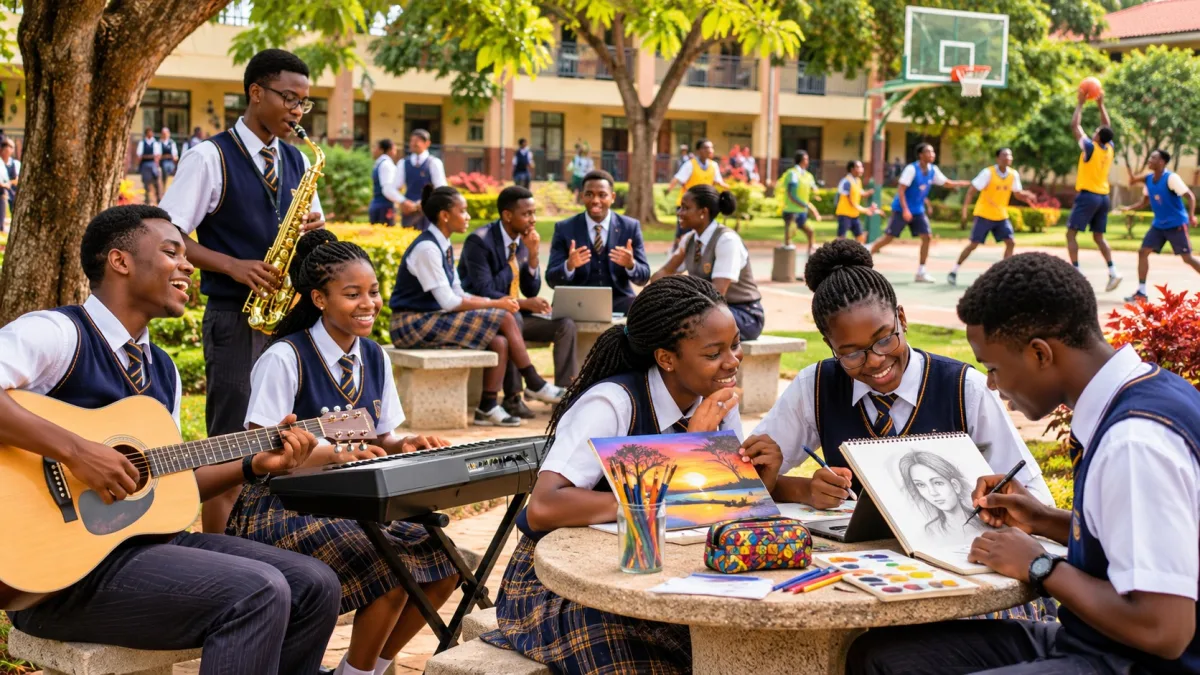
Some of life’s most valuable lessons are learned outside the classroom.
While academic subjects provide essential knowledge, experiences in sports, performing arts, leadership and community service help young people discover who they are and what they can become.
Think of the student who finds their voice in a debate, the one who learns perseverance through a long season on the sports field, or the one who discovers a love of music in a school band. These moments rarely appear on a report card, yet they often shape a young person as deeply as any lesson.
True education develops the whole person, not just the mind.
Discovering Talents Beyond Academics
Every student possesses unique strengths.
Some excel in mathematics and science, while others discover their abilities through music, drama, athletics or creative expression. Many have talents in several areas — and some have not yet had the chance to find out what they are good at.
A well-rounded education provides opportunities for every learner to explore these interests.
Through extracurricular activities, students develop confidence, discipline, teamwork and the courage to pursue unfamiliar challenges. A student who struggles in one subject may shine on stage or on the field, and that success can bring new confidence back into the classroom.
These experiences often reveal talents that traditional examinations cannot measure.
Learning Through Real-Life Experiences
Education becomes more meaningful when students apply what they learn.
- Leadership opportunities teach responsibility. Leading a club, a team or a project shows students that leadership is about serving others and following through.
- Team sports develop collaboration. Students learn to trust one another, play their part and handle both victory and defeat with grace.
- Community service encourages empathy. Meeting needs beyond their own experience helps students see the world through others’ eyes.
- Performing arts nurture creativity and self-expression. Music, drama and art give students the courage to share ideas and feelings with an audience.
Together, these experiences prepare young people to navigate life with confidence and purpose.
Raising Well-Rounded Individuals
The goal of education should extend beyond excellent academic results.
We must prepare young people who can communicate effectively, work with others, demonstrate integrity and contribute positively to society. These capabilities are developed through practice — in rehearsals, matches, meetings and service projects as much as in lessons.
Academic achievement opens important doors, but character, confidence and practical experience help students make the most of those opportunities.
When schools value the whole range of learning — in classrooms, on stages, on sports fields and in the wider community — every student has more chances to find where they shine.
When learning extends beyond the classroom, education becomes preparation for life.
Questions & answers
Why are extracurricular activities important?
What do students learn from activities outside the classroom?
What should the goal of education be?
Conversation (0)
Comments are moderated and appear after review. Please be respectful. Comment policy.
Join the conversation
Sign in with a verified email to comment and react. Reading is always free.
No comments yet.