Great Leadership Begins with People
Leadership is not simply about holding a position of authority. It is about inspiring people, building trust and creating an environment where everyone can thrive.
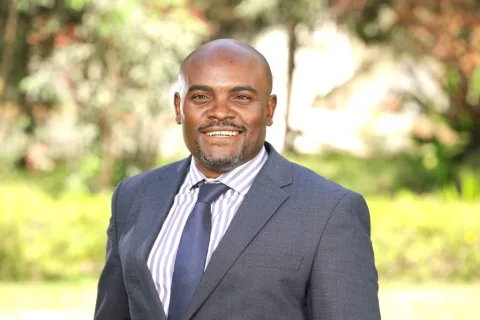 By John Karanja
4 min read

Leadership is not simply about holding a position of authority. It is about inspiring people, building trust and creating an environment where everyone can thrive.
Titles, offices and organizational charts tell us who is responsible for what. They do not tell us whether people feel inspired to give their best, whether they trust the decisions being made, or whether they believe their contribution matters. Those things are earned, day by day, through the way a leader treats people. Authority may be granted; influence has to be built.
Leadership in education starts with understanding
In education, effective leadership begins with understanding the needs of students, teachers and the wider school community.
A school is a living community. Students arrive with different backgrounds, strengths and worries. Teachers carry the daily responsibility of turning plans into learning. Parents, support staff and neighbours each have their own hopes for what the school should be.
No plan, however well designed, can succeed if it overlooks the people it is meant to serve. Understanding comes first: spending time in classrooms and corridors, asking questions before offering answers, and paying attention to what is said — and to what is left unsaid.
People perform at their best when they feel valued
People perform at their best when they feel valued.
Feeling valued is rarely about grand gestures. It shows up in small, consistent actions: noticing effort as well as results, giving credit generously, and treating people’s time and ideas with respect. When people believe their work is seen and appreciated, they bring more energy, creativity and commitment to it.
The opposite is also true. When people feel overlooked or taken for granted, even talented and dedicated individuals begin to hold back. Valuing people is therefore not a soft extra — it is central to how well a team performs.
Listening, encouraging and making room for every voice
A great leader listens, encourages new ideas and recognizes that every individual has something meaningful to contribute.
- Listening means giving full attention, seeking to understand before responding, and being willing to have one’s mind changed.
- Encouraging new ideas means creating a climate where people can suggest improvements, try new approaches and learn from what does not work — without fear of ridicule.
- Recognizing every contribution means remembering that insight can come from anywhere: a newly qualified teacher, a member of support staff, a quiet student or a concerned parent.
When people know they will be heard, they speak up earlier — about problems and opportunities alike. That makes the whole institution wiser.
Relationships, not just policies and procedures
Strong educational institutions are built on relationships, not just policies and procedures.
Policies and procedures matter. They create clarity, fairness and consistency. But on their own they cannot create a sense of belonging, motivate a struggling learner or carry a tired colleague through a difficult term. Relationships do that work.
Trust between leaders and staff, between teachers and students, and between the school and its families is what allows a community to handle change, resolve disagreements and pull together when things are hard. Policies describe how a school should work; relationships determine whether it actually does.
Supported teachers, understood students
When teachers feel supported, they become more confident in their work. When students feel understood, they are more willing to explore their potential.
Support for teachers can take many forms: time and space for professional growth, clear communication, practical help with challenges, and the assurance that leadership will stand with them. Confident teachers are more willing to try new approaches, to reflect honestly on their practice and to invest in every learner.
Students, in turn, take risks in their learning when they feel understood. A learner who believes that the adults around them see both their potential and their struggles is far more likely to ask questions, attempt difficult tasks and persevere after setbacks. In this way, the care shown to teachers flows on to students.
Empowering others rather than simply directing them
Leadership should therefore focus on empowering others rather than simply directing them.
Direction has its place; there are moments when clear decisions and firm guidance are exactly what is needed. But leadership that relies only on instruction keeps people dependent and limits what a community can achieve. Empowering leadership shares ownership. It sets a clear purpose, then trusts people with the responsibility, resources and room to make good decisions.
Empowerment also means growing leadership in others — in classrooms, in departments and among students themselves. The strongest communities do not depend on one person; they develop leaders at every level.
The true measure of leadership
The greatest measure of leadership is not how much authority we hold, but how many people we help succeed.
It is a simple test, and a demanding one. At the end of a term, a year or a career, the question worth asking is not how much control we had, but who grew because of the way we led. Did teachers become more confident? Did students discover more of what they are capable of? Did the community become stronger and more united?
Great leadership begins with people — and, in the end, it is measured by people too.
Questions & answers
What makes a great leader in education?
Why do relationships matter more than policies in a school?
How should leadership be measured?
Conversation (0)
Comments are moderated and appear after review. Please be respectful. Comment policy.
Join the conversation
Sign in with a verified email to comment and react. Reading is always free.
No comments yet.